[See Part One]
If sharing family histories as part of Quaker work on Right Relationships does nothing else, it leads us into place-based learning. I wanted to use our visit to Colorado to deepen my understanding of how indigenous people used the land before whites arrived and how it was stolen. It is a good guess for any of these stories anywhere in what is now the U.S. that the story would be violent. This one is no exception.
Due to scheduling constraints, we started with the Greeley History Museum. I was worried that, starting there, my granddaughters would come away from the visit with romanticized ideas about the lives of my great-grandparents rather than facing the realities that made it possible for them to be there. But the museum acknowledged the presence of indigenous groups on the land and included a panel on the “Meeker Massacre,” which involved the Ute with Nathan Cook Meeker, the founder of the city. We learned more about that interaction from one of the docents at Greeley’s Centennial Village. He shared the story, however, only because we mentioned our interest in indigenous people; it was not part of his standard talk. Overall, the Greeley museums focus on the experience of the city, not what came before.
In contrast, we walked into the History Colorado Center between tall Cheyenne and Arapaho tipis, and the girls opened doors in a life-size model buffalo to learn how various buffalo parts were used in the lives of the Plains groups. The major exhibits on the Ute, Cheyenne, and Arapaho had been designed with tribal consultants, were presented in first person narratives, and literally included Ute, Cheyenne, and Arapaho voices.
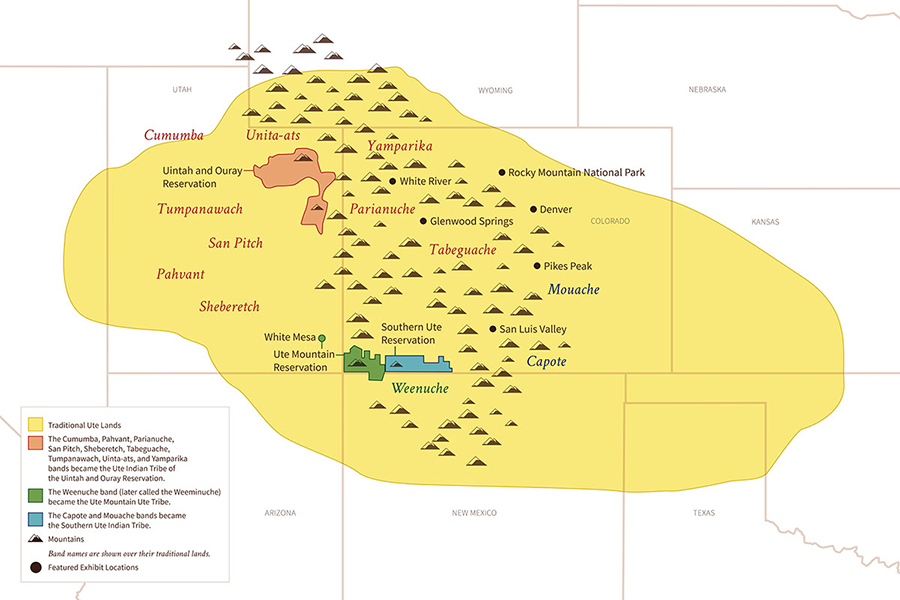
The significance of the Meeker Massacre became terribly clear in the Ute exhibit there. Nathan Cook Meeker was a former agricultural editor for The New York Tribune, under publisher Horace Greeley. In 1870, Meeker founded the settlement (later named for his former boss) as a utopian community, with values including agriculture and irrigation. After he was appointed Indian Agent at the White River Agency in western Colorado in 1878, he started to force agriculture onto the Ute, a mountain tribe with a central skill in horse breeding. The Ute used a horse racing track to demonstrate the quality of their horses to traders, but Meeker plowed it under, literally using the land to evangelize his values. After this direct assault on the Ute way of life, some Ute killed Meeker and ten others and kidnapped his wife and adult daughter (they were freed a few weeks later through the intervention of a tribal leader). In the aftermath of this action, the Ute were removed from their treaty-committed mountain home territory to what is now the Unitah and Ouray Reservation in Utah – a state that was actually named for them.
[Continued in Part Three]
 Finding My Place